


World Population Day: India’s Biggest Challenge or Its Greatest Strength?
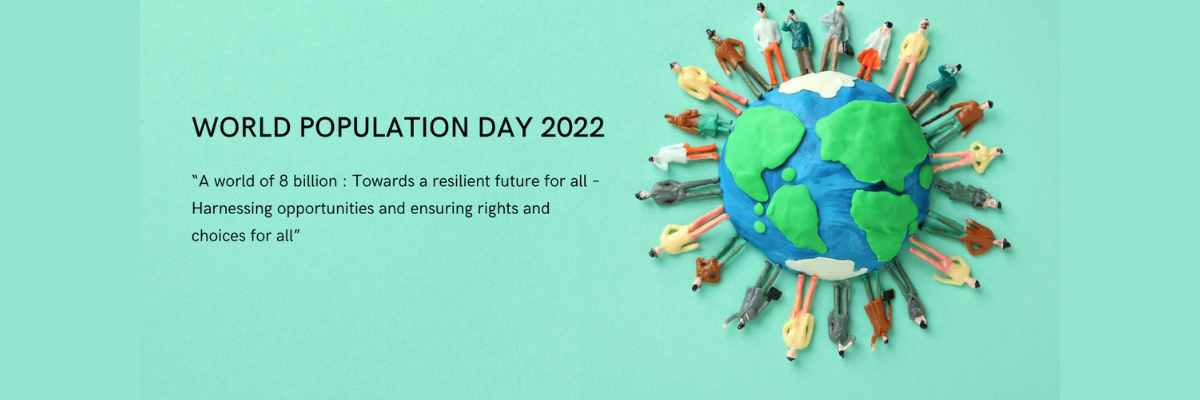
Every year on July 11, the world observes World Population Day. For many years, discussions around population focused on numbers, growth rates, and the challenges of feeding and supporting a growing population.
But for India, the conversation is changing.
In 2023, India became the world’s most populous country, overtaking China with a population of nearly 1.46 billion people. That’s almost 18% of the world’s population.
The real question is no longer whether India has too many people. The question is whether India can transform its vast population into its greatest strength.
The Power of a Young Nation
One of India’s biggest advantages is its youth.
With more than 371 million people between the ages of 15 and 29, India has the largest youth population in the world. At a time when many developed countries are grappling with aging populations and shrinking workforces, India has a young, energetic generation ready to drive growth and innovation.
This year’s United Nations theme for World Population Day — “Empowering young people to create the families they want in a fair and hopeful world” — reflects this shift in thinking. The focus is no longer on controlling population numbers, but on creating opportunities through education, healthcare, gender equality, and informed choices.
India’s Demographic Dividend: A Once-in-a-Generation Opportunity
India’s median age is around 29.5 years, making it significantly younger than China, Europe, Japan, and many Western nations.
This gives India what economists call a demographic dividend — a period when the working-age population is larger than the dependent population. Simply put, more people are earning, producing, and contributing to the economy than those who depend on them.
If managed well, this can become one of the biggest drivers of India’s growth story.
A Massive Workforce
As countries across the world face labor shortages, India has a steady pipeline of young talent entering the workforce every year.
This gives industries such as manufacturing, technology, healthcare, and services a strong foundation for expansion and global competitiveness.
Faster Economic Growth
When more people are employed, incomes rise, spending increases, and savings grow.
Those savings are invested through banks and financial institutions into roads, railways, schools, hospitals, and businesses. The result is a virtuous cycle that fuels economic growth and improves living standards.
A Global Talent Hub
India’s young population is increasingly digital-first, tech-savvy, and globally connected.
From software development and artificial intelligence to engineering, finance, and pharmaceuticals, Indian professionals are powering businesses around the world. Today, some of the world’s largest companies rely heavily on Indian talent for innovation and leadership.
A Thriving Startup Ecosystem
Young people are often the biggest drivers of change.
India has emerged as one of the world’s leading startup destinations, with entrepreneurs building innovative solutions across fintech, edtech, healthcare, clean energy, logistics, and e-commerce.
Many of these startups are solving uniquely Indian challenges while creating solutions with global potential.
A Powerful Consumer Market
India’s young population is also creating one of the world’s largest consumer markets.
Whether it’s housing, automobiles, smartphones, travel, entertainment, or financial services, young consumers are driving demand across sectors. This strong domestic market makes India an attractive destination for global investment and business expansion.
But Potential Alone Is Not Enough
A demographic dividend is not guaranteed.
To convert this opportunity into long-term prosperity, India must continue investing in three critical areas:
Skill Development: Young people need industry-relevant skills that match the demands of a rapidly evolving economy.
Job Creation: Quality employment opportunities must grow at the same pace as the workforce.
Health and Well-being: A productive nation requires access to physical and mental healthcare for all.
The success of India’s demographic story will depend on how effectively these challenges are addressed.
India’s Population Story Is Changing
Another important fact often overlooked is that India’s population growth is slowing.
The country’s Total Fertility Rate (TFR) has already fallen below the replacement level of 2.1 children per woman. In simple terms, Indian families today are choosing to have fewer children than previous generations.
However, the picture varies across regions.
Several southern and western states are already experiencing lower birth rates and aging populations, while states such as Bihar and Uttar Pradesh continue to have relatively higher fertility rates. This makes India’s demographic landscape diverse and complex.
Looking Ahead
Experts believe India’s population could peak at around 1.7 billion during the 2060s before gradually beginning a long-term decline.
What happens between now and then will shape the country’s future.
The choices India makes in education, employment, healthcare, women’s empowerment, urban planning, and social development will determine whether its population becomes a challenge or a competitive advantage.
World Population Day is not really about counting people.
It is about investing in people.
India’s greatest resource is not found beneath the ground or within its borders. It is found in its classrooms, workplaces, startups, laboratories, farms, and homes.
If every young Indian is equipped with the right opportunities, skills, healthcare, and support, India’s population can become the engine that powers the nation’s next era of growth.
As India leads the world in numbers, the next challenge is to lead in opportunity, innovation, inclusion, and human development.
Because the future of 1.46 billion people is not just India’s story—it is a story that will impact the future of the world.