


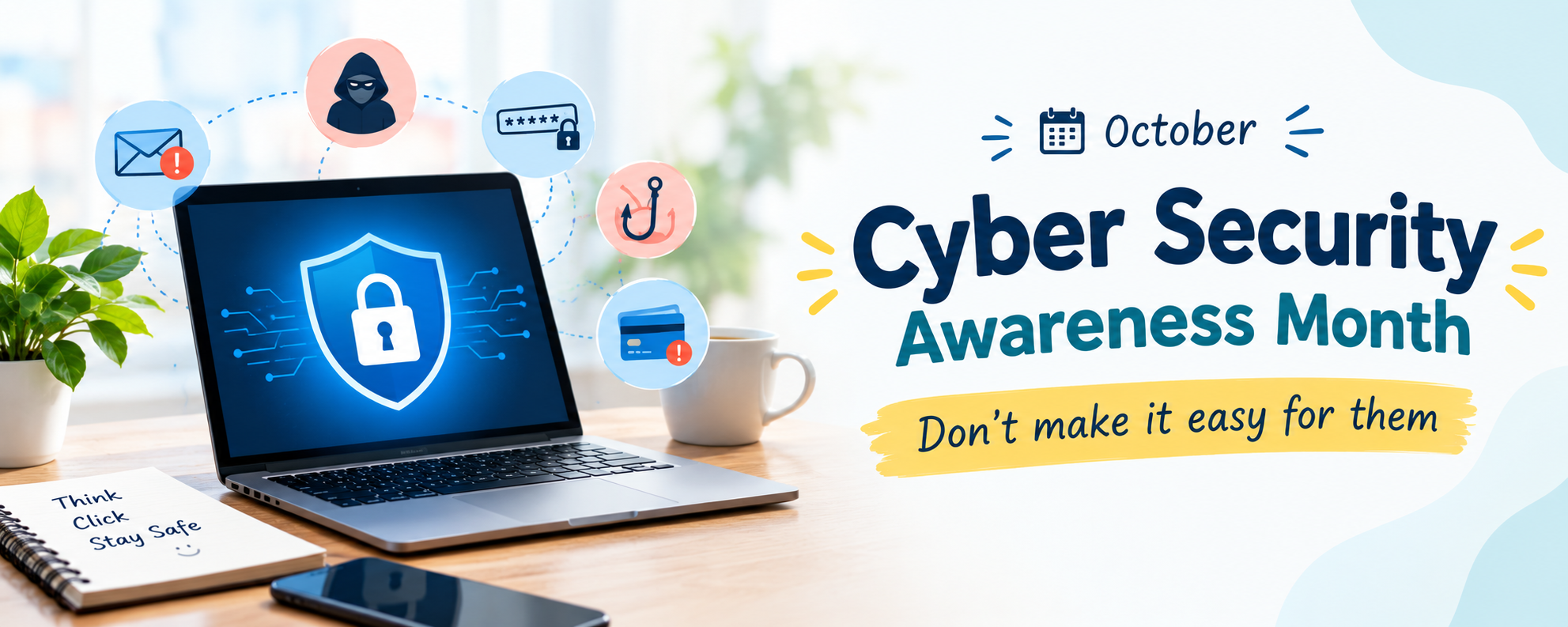
October : Cyber Security Awareness Month – Don’t make it easy for them
The primary theme for India’s 2026 campaign is “Build a Culture of Cyber Hygiene” (with supporting variations across public banking sectors like “Cyber Smart India: Secure Today, Resilient Tomorrow”). The ongoing drive aims to sensitise citizens, businesses, and critical industries against rising AI-enabled frauds, phishing, and evolving online threats.
Ten years ago, cyber security was mostly seen as a technical issue. Today, we know that it concerns the resilience of society as a whole. Security is not just something for the IT department – it is an everyday skill that everyone needs, just like traffic rules for those who drive cars.
The digital world has made banking, shopping, communication and everyday transactions faster and more convenient than ever. With just a smartphone and an internet connection, we can pay bills, transfer money, shop online and access banking services from almost anywhere.
But convenience also comes with responsibility.
Think Before You Click. Verify Before You Share. Stay Alert Before You Act.
A single careless click, an unverified phone call or sharing an OTP with a fraudster can put personal information and hard-earned money at risk.
Fraudsters Are Getting Smarter
Cybercriminals constantly develop new ways to deceive people. They may pose as bank officials, police officers, electricity department representatives, courier companies or even friends and relatives. Ai makes it easier and faster for cyber crime.
A caller may say:
“Your account will be blocked.”
“Your electricity connection will be disconnected.”
“A case has been registered against you.”
“Your KYC has expired.”
“Tell me the OTP to complete the verification.”
The objective is to create fear, urgency or curiosity so that you act without thinking.
Remember:
Fear is their weapon. Awareness is yours.
Never Share Your Secrets
Your OTP, PIN, CVV, passwords and banking credentials are confidential.
No genuine bank official will ask you to reveal these details over a phone call, SMS, email or social media message.
If someone asks for them, stop the conversation immediately.
Also remember that an OTP is meant to authorise a transaction—not to receive money.
Think Before You Click
Fraudulent links can look remarkably genuine. A message may appear to come from your bank, a delivery company or a government department.
Before clicking:
Check the sender carefully.
Do not open suspicious links or attachments.
Do not download apps suggested by unknown callers.
Verify the website address before entering banking information.
Avoid conducting financial transactions on unsecured public Wi-Fi.
When in doubt, don’t click. Verify first.
Beware of “Digital Arrest” and Threat-Based Scams
Fraudsters may falsely claim to be police officers, government officials or investigators. They may threaten arrest, legal action or financial penalties and demand immediate payment.
Do not panic.
No legitimate authority will conduct a “digital arrest” or demand money through a video call to prevent an imaginary case.
Disconnect the call and independently verify the claim through official channels.
Protect Your Digital Identity
Cyber security begins with everyday habits:
Use strong, unique passwords.( Never birthdays or children’s names)
Enable two-factor authentication wherever possible.
Keep your phone, computer and apps updated.
Install applications only from trusted sources.
Review your bank alerts and transaction notifications.
Never leave your phone or banking credentials unattended.
And most importantly, don’t allow curiosity, fear or urgency to override common sense.
If Something Goes Wrong, Act Quickly
Even the most careful person can become a victim of fraud.
If you notice an unauthorised transaction or suspect that you have shared sensitive information with a fraudster, act immediately.
Contact your bank through its official channels and report the incident promptly. In India, financial cyber fraud can also be reported through the 1930 cyber fraud helpline and the official cybercrime reporting mechanism.
The faster a fraud is reported, the better the chances of taking corrective action.
Make Cyber Safety a Habit
Cyber security isn’t about being an expert in technology.
It is about developing simple habits:
STOP. THINK. VERIFY.
Before sharing information, verify who is asking.
Before clicking a link, verify where it leads.
Before making a payment, verify the recipient.
Before responding to a threat, take a breath and verify the claim.
Because protecting your digital identity, your money and your personal information doesn’t begin with technology.
It begins with you.
Cyber Security Is Everyone’s Responsibility.
Stay Alert. Stay Safe. Stay Secure.