
blog

blog

March is a month to remember.. Shaheed Diwas & the Dandi March

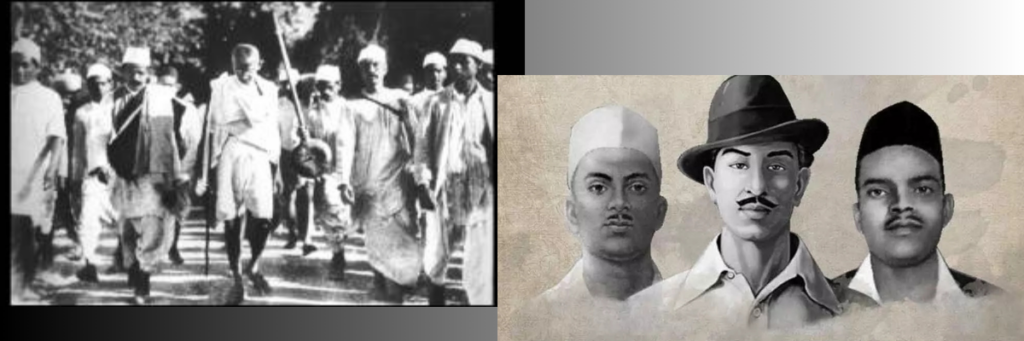
Home Different Paths, One Powerful DreamIndia’s freedom struggle was not shaped by one method alone. It was driven by courage in many forms — from peaceful marches to fearless sacrifice.Shaheed Diwas (23rd March) and the Dandi March (beginning 12th March 1930) beautifully reflect this shared spirit. Though their approaches differed, both were inspired by one powerful idea: Purna Swaraj — Complete Independence. The Dandi March: A Walk That Shook an Empire Led by Mahatma Gandhi, the Dandi March began as a 240-mile journey to protest the British Salt Tax. Salt — a simple, everyday necessity — had been heavily taxed and monopolised. When Gandhi picked up a handful of salt at Dandi, it was more than a symbolic act. It was a message: ordinary Indians could peacefully challenge unjust laws. The march inspired millions across the country to join the Civil Disobedience Movement, proving that collective, non-violent action could become a powerful force. Shaheed Diwas: Courage That Inspired Generations Shaheed Diwas honours the sacrifice of Bhagat Singh, Shivaram Rajguru, and Sukhdev Thapar, who were executed on 23rd March 1931. Their bravery and unwavering belief in freedom deeply moved the nation. They became symbols of youthful determination and fearless patriotism. Their sacrifice strengthened the resolve of countless Indians, especially the youth, to stand up for independence and justice. One Goal: Purna Swaraj In 1929, the Indian National Congress declared Complete Independence as India’s ultimate objective. Both the Dandi March and the sacrifice remembered on Shaheed Diwas were expressions of this shared dream — a free India built on dignity, equality, and self-respect. A Legacy That Lives OnThe Dandi March teaches us the strength of peaceful resistance.Shaheed Diwas reminds us of the power of courage and conviction. Together, they represent the many voices that shaped India’s journey to freedom — voices that differed in method but were united in purpose.Their legacy reminds us to never take our freedom for granted. And remember that even simple acts — whether a march to the sea or a fearless stand for belief — can change the course of history.

blog

International Women’s Day (IWD)

Home International Women’s Day (IWD) is a global event celebrated on the 8th of March every year since 1911. Apart from honouring the achievements of women , this day is primarily a critical beacon which calls action to accelerate women’s equality.The International Women’s Day (IWD) 2026 theme is “Give To Gain,” The campaign highlights that “when women thrive, we all rise,” fostering a supportive, interconnected communityIn India’s glittering cities, the day is marked with corporate seminars and brunch deals. NGOs hold events at which SHG members and others are felicitated. Roses are distributed and women receive special treatment from male colleagues and general public.But for millions of women in the country’s urban slums and rural hinterlands, it is just another day of relentless labour.In many low-income Indian households, women take on a gruelling “double burden.” More women step into roles traditionally held by men to rescue their families from financial ruin. In rural India too, women are learning trades like welding or becoming “barefoot veterinarians” to support their families when traditional income sources fail.The good news is many poor women have succeeded in breaking the generational cycle of poverty by supporting the education and progress of their children. These women are the true unsung heroines of our nation.Self-Help Groups (SHGs): Schemes like the Pradhan Mantri MUDRA Yojana have empowered millions of poor women to start small businesses, transforming them from dependent homemakers into confident entrepreneurs. How Can we Help?True celebration of Women’s Day goes beyond social media posts:Support Women Artisans and street vendors: Buy directly from women-owned small businesses and local artisans to help them achieve financial independence. Don’t bargain unfairly.Acknowledge the “Everyday Hero”: Recognize the invaluable contribution of the women in your own life—your mother, wife daughter/ daughter –in –law, the domestic help, the teacher, the service providers and others —who keep your home running and society too.Stand up against domestic abuse and exploitation of girls and women. Join the fight against the prevalent system of dowry which destroys families and is the reason why baby girls are rejected in many communities.At Paramin women are an integral part of the team and are always given equal opportunity and appreciation. Paramin believes in equity. There’s no room for gender bias.Happy Women’s Day.

blog

National Safety Day : Fostering a Culture of Safety

Home Celebrated every year on March 4, National Safety Day marks the foundation of the National Safety Council (NSC) of India.But this day is more than a commemorative event. It is aboutbuilding a true safety culture — where safety becomes a daily habit, not an occasional reminder. Not action after the accident but preventive action and laws. Why Safety Still Demands Urgent Attention Despite ongoing efforts, India continues to face serious safety challenges — especially on roads and at workplaces. India’s Road Safety Reality India has just about 1% of the world’s vehicles, yet accounts for nearly 11% of global road deaths. In 2023 alone, over 1.72 lakh lives were lost. Key concerns include: • Speeding as the single biggest cause — responsible for nearly 70% of traffic fatalities. • Followed by Not Using Safety Gear • Over 50,000 two-wheeler riders died in 2023 without helmets. • Around 16,000 deaths were linked to not wearing seatbelts. • Dangerous Driving Habits • Wrong-side driving • Triple riding (reported sharp increases in some regions) • Mobile phone usage while driving These behaviors continue to put lives at risk daily. Vulnerable Road Users Nearly 87% of road victims are pedestrians, cyclists, or motorcyclists — often due to lack of dedicated lanes and safer infrastructure. The “Golden Hour” & Good SamaritansIndia’s Good Samaritan protections encourage bystanders to help accident victims without fear of legal harassment — a critical step in improving survival during the life-saving first hour after a crash.Street Safety Beyond TrafficFor women and girls, safety also includes protection from harassment in public spaces. Verbal abuse, catcalling, and unsafe public environments remain concerns, particularly in predictable locations and time slots. Urban vs. Rural DivideWhile metro cities see heavy traffic density, rural and Tier-II regions often report higher fatality rates due to weaker enforcement, slower emergency response, and limited infrastructure.Workplace Safety: A Structural ShiftWorkplace safety in India is undergoing one of its biggest reforms in decades with the implementation of the Occupational Safety, Health and Working Conditions Code, 2020, fully operational from January 2026.This legislation consolidates and modernizes multiple labor laws, aiming to standardize safety compliance across sectors. Yet, challenges remain: India accounts for nearly 25% of global workplace fatalities. The construction sector remains the most hazardous. Falls account for nearly 39% of construction-related deaths. Helmets and vests embedded with sensors now monitor impact, fatigue, and unsafe conditions in real time. AI-Powered Monitoring Intelligent cameras can automatically detect missing safety gear or dangerous behaviors at worksites. ESG & Boardroom Accountability Safety performance is now part of Environmental, Social, and Governance (ESG) metrics. Investors increasingly evaluate companies based on safety records — making safety a board-level priority, not just an operational issue. The Core Message of National Safety Day Safety cannot be outsourced to laws alone. It depends on: Individual discipline Corporate accountability Infrastructure planning Responsible civic behavior “Fostering a culture of safety” means moving from compliance to commitment — from enforcement to awareness — and from reaction to prevention.National Safety Day reminds us that safety is not a one-day campaign. It is a mindset that must guide how we work, travel, and live — every single day.

blog

National Science Day 2026: When Creativity Thinks Like Science

Home There was a time when science lived in laboratories and creativity lived in studios.One dealt with formulas, the other with feelings.That divide no longer exists.On National Science Day, as we celebrate inquiry and discovery, it is worth acknowledging a new reality: science has become a daily partner to creative minds. And Artificial Intelligence has accelerated that partnership dramatically.Today, insight begins with analytics.Stories are shaped by behaviour patterns.Media planning is powered by algorithms.Science invents. Creativity enables impact.“Creative intelligence” has started to mean something very specific in the science-and-AI era. It’s no longer just originality or aesthetic instinct. It is the ability to combine imagination with evidence, empathy with analytics and narrative with measurable outcomes.At Paramin Advertising & Marketing Associates, we embrace this blend. We use science to understand audiences, digital tools to refine direction and creativity to move people. In this environment, the creative professional is evolving. We are part storyteller, part strategist, part technologist. Analytical enough to respect evidence, imaginative enough to transcend it.National Science Day is therefore not only a tribute to Sir C. V. Raman but a reminder to remain curious, experimental and open to new methods of solving old issues. The important thing is not to stop questioning.Remember Albert Einstein’s most famous quotes on curiosity emphasize that it is more important to keep questioning than to have innate talent. He famously stated, “I have no special talent. I am only passionately curious.”

blog

International Mother Language Day 2026: Protecting India’s Voices

Home Celebrated every year on February 21, International Mother Language Day is especially significant for India in 2026 In a rapidly globalising world, the day serves as a powerful reminder that language is more than communication—it is culture, identity, memory, and belonging. Why Mother Languages Matter to India Preserving a Living HeritageIndia is one of the world’s greatest linguistic hotspots. From tribal tongues to classical languages, each carries centuries of history, folklore, and worldview. International Mother Language Day underscores the urgent need to protect endangered languages before they disappear forever. When a language dies, an entire culture falls silent.Education That Begins at HomeLearning in one’s mother tongue during early education is proven to:Improve cognitive developmentStrengthen comprehension and confidenceReduce dropout ratesThis is especially crucial for tribal and marginalised communities, where language barriers often limit access to quality education.International Mother Language Day aligns seamlessly with India’s constitutional safeguards:Article 29 – Protection of cultural and linguistic rightsArticle 350A – Instruction in the mother tongue for linguistic minorities Why 2026 Matters In 2026, the dominance of global languages continues to accelerate the erosion of local tongues—especially among younger generations. This makes sustained action, policy support, and awareness more critical than ever.Every language carries a unique way of seeing the world. Protecting mother languages means protecting India’s plural soul.At Paramin, we believe meaningful communication begins in the language people think, dream, and live in. This International Mother Language Day, we celebrate the voices that define us—and commit to keeping them alive.

blog

Celebrating World Radio Day 2026: AI Is a Tool, Not a Voice

Home World Radio Day 2026, observed on February 13, carries a timely theme: “Radio and Artificial Intelligence – AI is a tool, not a voice.”The message is clear. Technology may enhance broadcasting, but credibility, empathy, editorial judgment and trust remain human responsibilities.Even in an age dominated by screens, radio continues to command extraordinary reach across India. It touches 97.5% of the population and covers over 90% of the country’s geography. Its endurance comes from habit, companionship, and reliability—radio travels with the listener.Why Radio Leads in Urban IndiaDrive-time dominanceA significant portion of urban audiences tune in while driving, giving brands uninterrupted access to professionals and decision-makers when attention levels are high.RJ credibilityRadio Jockeys function as trusted community influencers. Their conversational style, humour, and familiarity make brand integrations feel like recommendations rather than advertising.Precision localisationCity and even micro-market targeting allow campaigns to adapt language, offers, and cultural cues, creating immediate relevance.Why Radio Matters in Rural IndiaAcross large parts of Bharat, radio continues to be a primary source of news, music, and public information where digital access is still evolving. Penetration is deep, habitual, and multigenerational. Importantly, listeners often display stronger trust in messages delivered through local stations and voices. Compared to television, radio production and media costs are drastically lower and production much faster. Brands can react to festivals, retail windows, price changes, or live developments almost instantly.Tactical use of RJ mentions, contests, and day-specific programming frequently multiplies engagement and recall.At Paramin, we have crafted spots and jingles that convert seconds into stories—designed around region, listener behaviour, and the credibility that only a trusted voice can deliver.As we celebrate World Radio Day, the partnership between human creativity and intelligent tools will only grow stronger. AI will enable efficiency and insight.But the voice that listeners believe in will always be human.

blog

Safer Internet Day February 10 2026

Home Safer Internet Day (SID) is an annual global initiative aimed at promoting safer, more responsible use of online technology, especially for children and young people. It serves as a reminder to, “think before you click” and encourages a collaborative approach to cyber security. Why Safer Internet Day is Important to India With millions of new users joining the internet, including children and senior citizens, awareness of phishing, identity theft, sexual abuse, harassment of children and online scams is crucial.Over 77% of India’s cybercrime ecosystem consists of financial frauds.Government Focus on Digital Hygiene: The Ministry of Electronics and Information Technology (MeitY) uses this day to launch nationwide campaigns, focusing on the “Stay Safe Online” initiative, to promote cyber hygiene and encourage the use of reporting portals like cybercrime.gov.in and the 1930 helpline. Key Themes & Focus Areas for 2026 The 2026 theme focuses on navigating the rapid growth of artificial intelligence (AI) and educating users on discerning truth from deception.It reinforces that security is a shared responsibility among government, industry and users.Rather than just highlighting dangers, the day empowers users with tools and knowledge—such as how to create strong passwords and manage their digital footprint—to enjoy the internet’s benefits safely.

blog

World Cancer Day 2026: United by Unique, Stronger Together

Home Cancer is not a disease that anyone can afford to ignore. Every year, World Cancer Day (February 4) serves as a powerful global reminder of the urgency to act against cancer. Along with India’s National Cancer Awareness Day (November 7) and International Childhood Cancer Day, it calls for collective action focused on education, prevention, early detection and equitable care—the most effective ways to reduce cancer-related mortality.The message is clear: many cancers are preventable and early action saves lives. What Drives Cancer Risk? While cancer is complex, research consistently points to lifestyle and environmental factors as the leading contributors. Major Lifestyle & Environmental Causes Tobacco UseThe single largest preventable cause of cancer. Tobacco is responsible for nearly 90% of lung cancer cases, and significantly increases the risk of cancers of the mouth, throat, bladder, pancreas, and more. Diet & ObesityPoor nutrition, excessive consumption of processed foods and red meat, and obesity contribute to 30–35% of cancer-related deaths globally. Alcohol ConsumptionRegular alcohol intake raises the risk of cancers of the breast, liver, throat, mouth, oesophagus, and colon. InfectionsViruses and bacteria such as HPV and hepatitis account for nearly 18% of global cancer cases, highlighting the importance of vaccination and early treatment. Physical InactivitySedentary lifestyles increase cancer risk, often working alongside obesity. Environmental ExposureAir pollution, asbestos, industrial chemicals, and contaminated water are proven cancer-causing agents. Excessive Sun ExposureUnprotected exposure to UV radiation is a major cause of skin cancers. Genetics : Less Common Than We Think Contrary to popular belief, only 5–10% of cancers are inherited. The vast majority—90–95%—result from genetic changes acquired over a lifetime due to environmental exposure and lifestyle choices. This underscores the power of prevention and early intervention. Warning Signs That Should Never Be Ignored Early detection remains one of the strongest weapons against cancer. Persistent lumps or swelling Unusual bleeding or discharge Unexplained weight loss Prolonged fatigue or pain Changes in moles or skin lesions Listen to your body. It can make all the difference. World Cancer Day 2026: The Themes That Matter “United by Unique” recognises that every individual’s cancer journey is different. It calls for personalised treatment, dignity, empathy and inclusion, particularly for underserved communities. A Turning Point in Cancer Care We are entering what many describe as a golden age of cancer research—where scientific advances are translating into longer survival, improved quality of life, and more targeted treatments. But progress only matters when it reaches everyone. At Paramin We believe communication has the power to inform, influence, and inspire action. This February, as we observe World Cancer Day, we reaffirm the need for awareness-led storytelling that encourages prevention, compassion, and equitable healthcare. We appreciate the CSR support of our clients towards cancer research Because when it comes to cancer, awareness isn’t optional—it’s lifesaving

blog

Republic Day 2026

Home Communicating the Spirit of India Republic Day is more than a celebration—it is a reminder of India’s values, unity, and shared responsibility in shaping the nation’s future. Republic Day 2026 holds special significance as India marks 150 years of Vande Mataram, the anthem that continues to inspire generations. On January 26th at Kartavya Path, the spirit of unity, heritage, and national pride will come alive once again. At Paramin Advertising & Marketing Associates, with over 43 years of experience, we remain committed to purposeful communication that supports India’s growth across key sectors. This Republic Day, we reaffirm our dedication to creating responsible, impactful narratives that resonate with both heart and mind. We thank our clients for their trust, our partners and vendors for their collaboration and our teams for their passion and commitment. Your continued support enables us to create communication that is responsible, impactful, and aligned with India’s growth story. Jai Hind. Building Brand India. Communicating with Integrity.

Scroll to Top